
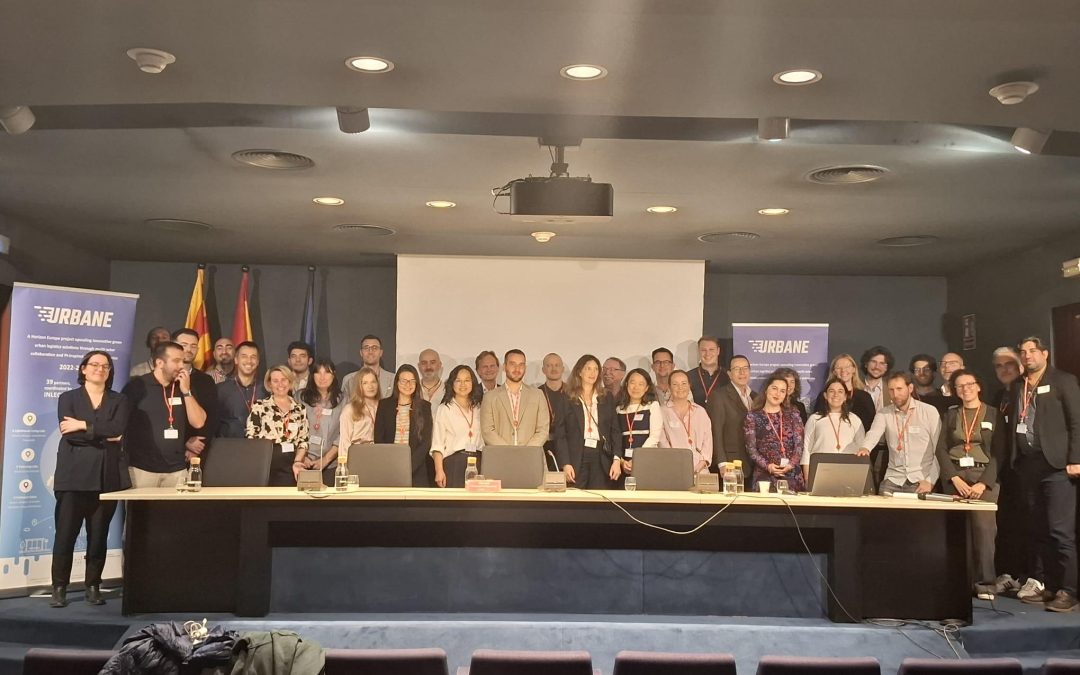
The Final Event of URBANE, held alongside the Urban Logistics Innovation Day in Barcelona, brought together city authorities, logistics providers, researchers, and technology innovators to explore how Europe can accelerate the transition towards cleaner, smarter, and more collaborative last-mile delivery. Against the backdrop of growing e-commerce demands and mounting pressure on urban environments, the event showcased practical tools, policy pathways, and real-world pilots that are redefining how goods move through cities.
A central theme running throughout the day was the shift from siloed operations to integrated, data-driven ecosystems. URBANE presented compelling results from its Lighthouse Living Labs, such as Helsinki, Valladolid, Thessaloniki, Bologna, as well as its digital twin cities Karlsruhe and Barcelona, demonstrating how a blend of physical interventions (from parcel lockers to autonomous delivery robots) and advanced digital tools can cut emissions, reduce distances travelled, and increase public acceptance. Particularly highlighted were URBANE’s digital tools, capable of simulating locker placement, routing strategies, and operational scenarios without the need for costly, real-world pilots.
The event also showcased the rise of Logistics-as-a-Service (LaaS), with the GREEN-LOG project demonstrating how smart marketplaces and dynamic pricing can nudge citizens towards more sustainable delivery options. Evidence from Mechelen and Ghent shows that people are willing to wait longer if the environmental and cost benefits are clear, a notable challenge to the culture of instant delivery.
Panels and breakout sessions underscored the importance of trust, governance, and shared data. Cities such as La Rochelle, Braga, and Mechelen emphasised the need for open standards, particularly for parcel lockers, and for governance models that align public goals with private-sector efficiency. The Data Space and tools presented by Urban Radar illustrated how cities can finally gain the granular data they need to manage curb space, plan micro-hubs, and anticipate logistics demand.
Cycle logistics also took centre stage, with pilots from Barcelona and Logroño showing that cargo bikes, supported by RFID technologies and well-placed lockers, can make last-mile operations cleaner and faster, especially in dense historic centres.
The final policy panel brought the message home: scaling innovation requires political will, regulatory clarity, and business models that work for both large carriers and smaller operators. From smart contracts to national standards for locker networks, the next phase of Europe’s urban logistics transformation will hinge on wide-scale adoption of the solutions showcased in Barcelona.